
.avif)
Highlights
For a business built on connecting people to the world, being offline isn’t an option. But Flight Centre’s new shop opening ran into a delay by a collapsed duct. Here’s how they turned it around.

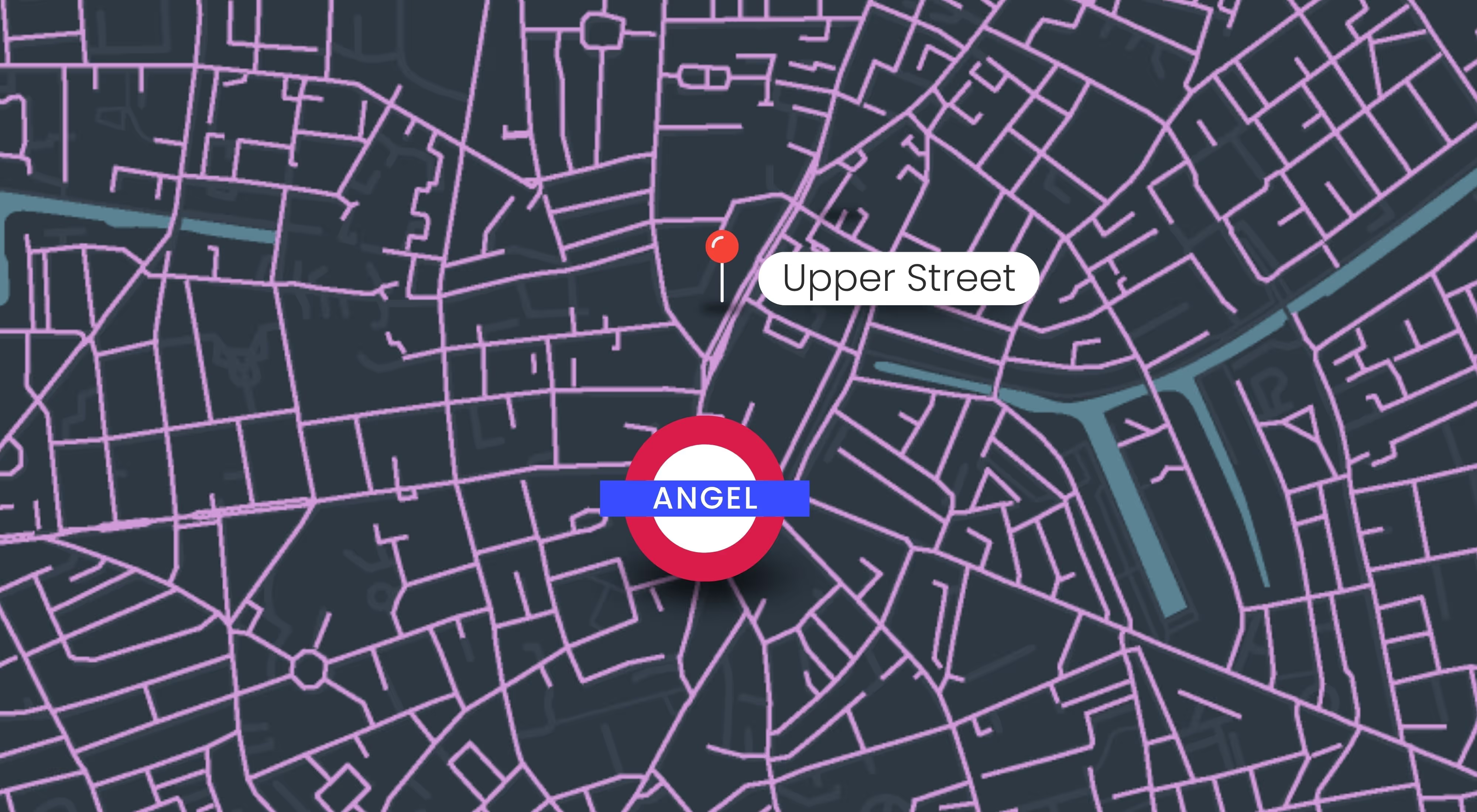
When Flight Centre, the unforgettable-experience-plotting travel experts, were preparing to open a brand-new shopfront on Upper Street in central London, everything was going to plan. The team had lined up suppliers early, including their internet provider, expecting smooth sailing to launch day.
Unfortunately, their installation was delayed, and the team kept chasing answers. Eventually, they learned the duct was collapsed and their chosen provider couldn’t fix it in time.
Grounded? Not for long
With just two weeks to go, Flight Centre had to act fast. They turned to Vorboss. In just over a week, the new shopfront was live and connected through Vorboss’s Rapid Install service.
Thanks to Flight Centre’s leadership and coordination across their teams in Europe and Australia, everything came together, and the store opened right on time.
“The collapsed duct was an unexpected challenge after months of delays with our previous provider. Vorboss stepped in quickly, took control, and kept things on track, ensuring the installation stayed on schedule despite the setback.”
-Tim Head, Global Service Delivery Head, Flight Centre
.avif)
So good, they brought us to Barcelona
The experience made such an impact that Flight Centre brought Vorboss into another project, this time in Barcelona. Using a local partner, they added another circuit for their new office. The line tails into the Vorboss infrastructure in Barcelona and links all the way back to the London network.
“Vorboss’s impressive internet service and customer experience gave us the confidence to bring them into further projects. Having a consistent connectivity partner across locations simplifies management and supports our growth.”
-Tim Head, Global Service Delivery Head, Flight Centre
A smooth landing
Even the most organised teams can run into last minute surprises. What matters is how fast you respond. Thanks to the team acting fast, with support from Vorboss’s Rapid Install service, Flight Centre opened their new shop without a hitch.
With reliable service and ultra-fast speeds, Vorboss proved to be more than just a backup plan, they became a trusted partner for the long haul. Today, they’re Flight Centre’s connectivity provider across three sites (and counting).
Tell us about yourself so we can serve you best.
Got a question?
This service is currently available in Central London. For locations outside this area, we may offer alternative business internet solutions.
Expedited installation incurs an additional fee:
-7-day business internet installation: £15,000
-14-day fast-track internet: £8,000
-28-day priority internet service: £3,000
Pricing shown is indicative and subject to building access requirements
More articles

For many landlords and building managers, the word “wayleave” feels like the responsible route whenever a fibre circuit is being installed on their property. It sounds formal and safe – a neat legal box to tick.
In many cases, however, a wayleave adds unnecessary complexity and delays, frustrates tenants, and can expose landlords to long-term legal risks.
At Vorboss, we’ve connected thousands of office spaces across London without a wayleave, keeping landlords in full control and getting tenants online faster.

What is a wayleave?
A wayleave is a written agreement between a landowner and a telecoms operator. It gives the operator permission to install and keep equipment on private property.
What many people don’t realise is that signing a wayleave also activates “Code rights” under the Electronic Communications Code. These rights go beyond simple permission, they give the operator legal powers to stay on the property indefinitely, access it when needed, and even refuse removal of their equipment in certain situations.
For a typical connection into a commercial building in London, a wayleave can make the fibre installation process slower, more expensive, and limit the landlord’s flexibility long term.
Why a wayleave isn’t required for standard in-building fibre connections
For a standard in-building fibre connection serving a tenant, a wayleave isn’t a legal requirement. Important protections, like building access, fire safety, repairing any damage, and removing equipment, are already covered by the tenant’s lease and usual building rules.
If no wayleave is signed, no Code rights are triggered, meaning the landlord retains full control and the installation exists under a simple, fully revocable licence.
In practice, this gives landlords far more protection and flexibility:
- No legal lock-in – the telecoms operator has no long-term rights to stay or refuse removal.
- Landlords keep full control – equipment can be moved or removed when the building changes.
- Faster fibre installation – no time lost in drafting contracts or solicitor reviews.
- Happier tenants – connections go live quicker; tenants get to move in faster.
By contrast, signing a wayleave and granting Code rights introduces a complex and expensive legal process for any fibre removal or relocation. This can take at least 18 months, plus potential court or tribunal proceedings, making it slower, and far less flexible for the landlord.

Public services across central London are evolving, and the City of London Corporation is leading the way.
Whether you work, live or study in the Square Mile, you’ll soon feel the difference that faster, more dependable connectivity brings.

What is the Future Network Programme?
The City of London Corporation is rolling out the Future Network Programme, a major project to modernise its entire digital infrastructure and bring everything under one unified network.
From offices and schools to iconic green spaces like Hampstead Heath, cultural destinations like the Barbican, and historic markets such as Leadenhall and Old Spitalfields, this upgrade will mean more reliable connectivity across the City’s buildings and public spaces.
It also extends to essential services, including critical sites run by the City of London Police. This enhanced connectivity will support everything from secure communication systems to faster, more resilient networks for emergency operations.
Leading this transformation is Roc Technologies, supported by Juniper Networks and Palo Alto Networks; all powered by the Vorboss fibre network. Together, we’re bringing the City onto a modern digital foundation that’s ready to support its future.
Who the Future Network Programme benefits and how?
The programme is designed for everyone who depends on public services in the Square Mile:
- Students in City-run schools will have fast, reliable connectivity to fully access digital learning tools.
- Public-sector teams will experience smoother hybrid working, better access to online platforms, and more efficient collaboration across locations.
- Residents and visitors will see improvements in public Wi-Fi, digital services, and online access in libraries, community hubs, and other shared spaces.
- The City of London Police will gain a more secure, faster and resilient network that enhances CCTV reliability and enables more effective frontline operations.
.avif)

.avif)