
Vorboss launches Simply Connected to simplify connectivity, IT and cybersecurity management for London businesses

In this blog, we’re going to introduce you to our new senior team, give you a rundown of our new services, and hear what the senior team think of this new direction.
Who’s Joined?
Recently, a new senior management team joined Optimity. Here’s an overview of who’s who:
Leeland Pavey, CEO
A veteran with over 25 years in the telecoms industry, Leeland combines significant experience with inspirational leadership that makes for successful organisations.
Andrew Frome, CFO
A highly commercial and entrepreneurial finance director. Andrew’s managed all aspects of global revenue and equity-backed businesses.
Matt Wise, CRO
Matt has over two decades’ experience of working in the IT technology sector. In that time, he’s been responsible for transforming organisations through metric management and a strong sales process.
As you can see, all of these individuals have an impressive track record in successfully scaling technology organisations.
What Are Our New Services?
We’ve broken up our new services into four areas, each headed with the ‘opti’ theming. Each area covers a faction of our IT and internet expertise.
The services are:
opticonnect
This is the home of our managed internet services. It includes wibre™, our signature wireless internet service that delivers the speed of fibre but can be installed in as little as 7 working days.
optisecure
The service where we keep business networks secure. This includes content filtering and managed switches, firewalls and threat protections. All of these efforts can help prevent malicious activity affecting your network.
optihost
Eliminate all that confusing paperwork by rolling your IT, WiFi and telephony services into one bill. All of these services are flexible and easy for you to control.
optisupport
The home of our IT services, which can cover all of your issues and resolve them quickly. It covers everything you need, from support to hosting.
What the Senior Team Think
Leeland, our CEO, had this to say about our recent developments:
Learn More
To find out more about our new services or ask any questions you have, get in touch.
Cost, availability, speeds, support and installation times all play a part in making the most appropriate choice. One might be faster than the others but speed should not be your only consideration.
In this post, we are going to discuss the three types of leased line connection that are available to you. These are fibre to the premises (FTTP), fibre to the cabinet (FTTC) and ethernet first mile (EFM). While cost, availability, speeds and installation times vary between them, they are all capable of providing you with a faster connection than broadband.
By the end of this post, you will feel more confident in choosing a connection that is right for your business. You will be able to consider your budget, timing and demand in order to make a wise investment. Before we go into more detail about the three of these options we will offer you an explanation of what leased lines are and how they work.
What is a Leased Line?
A leased line is a dedicated connection that works on a static bandwidth. Put in other words, you have an uncontended connection. You are not sharing your internet with anybody else as you have a private circuit that directly connects your premises to the internet. This enables your connection to support the day-to-day activities of your business and perform at a reliable speed all of the time.
Talking of speed, your uploads and downloads will be symmetrical on a leased line. Another way of saying this is that you can upload files as quickly as you can download them. With these high speeds and reliability, you are able to use the internet for a great range of tasks, including Voice over Internet Protocol (VoIP). Leased lines also come with low latency, which means websites can be accessed and load at a fast pace.
Having a leased line connection is not the same as using broadband. With the latter, your connection is competing with the activity of lots of other web users. Whatever they are doing will have an impact on the speeds you can access. This can make downloading files a sluggish process during peak time. For businesses, peak time is anytime so a broadband connection simply will not do.
Read more - before moving office, plan your internet connection in advance
Leased Line Comparison: FTTP, FTTC and EFM
With the definition and benefits of a leased line connection all fleshed out, let’s take a closer look at the types of leased lines available. As we said earlier, these are FTTP, FTTC and EFM. Each type has its own advantages and disadvantages and there are scenarios where one is more well-equipped than the others.
FTTP
FTTP, also known as a fibre leased line, provides an internet connection directly to your premises from the network supplier using a fibre optic cable. It is usually capable of providing the fastest possible speeds to your business and is completely uncontended. Another reason why it is liked so much by businesses is that it is scalable. They can invest in more bandwidth and overlay other services on the cable when they need to, plus reduce their spending and usage when they do not need as much.
If you work in a large office, a small office or an office of any size where lots of people depend on cloud services, transferring large files and using VoIP to do their jobs, then FTTP is what you need. It will give you enough bandwidth to get everyone online and doing the things they need to do in order to keep your company running. The uncontended factor will mean you are not disrupted by unreliable connectivity in the middle of an important task.
Advantages:
- Speed. With the right bandwidth, you are capable of doing anything over the internet and there will not be any delays.
- Uncontended bandwidth. Your connection is dedicated to your business. It is impossible for disruption to be caused by a user on the outside of your network.
Disadvantages:
- Installation times. FTTP can take between 30 and 90 days to install
- Cost. This is often a barrier that prevents many small to medium-sized businesses (SMBs) getting connected as they simply don’t have the budget.
Right now, however, SMBs can apply for a government voucher granting them up to £2,500 towards the cost of a gigabit internet installation with us.
The government has committed to making internet connections faster across the UK. Their vision involves a full fibre roll-out, and to help get this going they’ve set up the Gigabit Broadband Voucher Scheme. This lets small-to-medium sized businesses (SMBs) claim a voucher worth up to £2,500 which they can use towards the cost of installing a gigabit internet connection.
We’re a supplier of the Scheme and we’re going to tell you how the voucher works, the benefits of having a gigabit connection and why you should apply for a voucher with us.
What is the Gigabit Broadband Voucher Scheme?
The Gigabit Broadband Voucher Scheme was announced by the government in March 2018. It’s part of the Local Full Fibre Networks programme which launched in late 2017. The Scheme lets businesses apply for a voucher which grants them up to £2,500 towards the cost of installing a gigabit broadband connection.
How Does the Voucher Work?
We’re a registered supplier of the Scheme which means you can apply for a voucher with us. We’ll contact the government and request a voucher for you. The government will then get in touch with you to confirm you’re happy to go ahead with your application.
Next, we’ll begin installing your connection and let the government know when we’re done. Finally, they’ll ask you to confirm everything’s working and may make some final background checks before they pay.
What is a Gigabit Connection?
Right now, the UK has 95% coverage for broadband with speeds of 24 megabits per second or higher. But many of these connections depend on a copper telephone wire which can only support a limited speed.
One gigabit is equal to 1,000 megabits. To get those speeds, you’ll need a full fibre connection. Full fibre also supports symmetrical connections, giving you matching upload and download speeds.
Why Apply with Optimity?
There are lots of reasons why we’re the right supplier for you. With us, you get:
- Matching upload and download speeds – no slowdowns or buffering
- Your own dedicated, uncontended full fibre connection
- Flexibility with a range of speeds from 100Mbps up to 10Gbps+
- 24/7 UK support
- A dedicated account manager
Am I Eligible for a Voucher?
Before you apply, you need to check you’re eligible for a voucher. The Scheme is only open to small-to-medium sized businesses (SMBs). The government defines SMBs as companies with under 250 employees and an annual turnover of less than €50 million.
You can’t have had more than the allowed amount of de minimis aid in the last three years. Also, if you already have an internet connection that’s capable of 1Gbps, you can’t apply. You can read the full terms and conditions.
How Do I Apply?
Applying for a voucher with us is simple. Just go to this page and tell us a bit about yourself.
We provide London businesses with pioneering connectivity and IT products. From internet services and security, to hosting and support, businesses in the capital have become more collaborative, productive and efficient by using our solutions.
wibre™, our signature wireless internet service, is powered by 330 antennas on rooftops throughout London. It can give you the speed of a fibre connection in as little as 7 working days; whereas most fibre connections take anywhere between 60 - 90 days to install.
We can also review your building and internet usage, and determine which kind of connection will help you be more productive and efficient.
Become a PartnerAlong with our products, we’ll be talking about our IT partner program. We have two partner options: reseller and referral. While there are some differences in these, both give you a great opportunity to increase your reach and win new business by adding wibre™ to your portfolio.
Book a Meeting
Our team will be at the Expo across both days on stand K21. They’ll be happy to speak to you about all of our products and partner program. You’ll get the opportunity to use our connectivity checker, which can show you what type of connection is best for your business. You’ll also see our wibre™ antennas on display, which we’ll be glad to show you in more detail.
Registration for the Expo is free before 2nd October, and you can sign up here. Once you’ve done that, book a meeting with one of the team at our stand. Whether you want more information about our products or partner plans, we’ll be glad to speak to you.
See you in a couple of weeks’ time.
Your business needs an internet connection. There is a choice between a wireless or a fibre leased line. But what exactly are they? How will they benefit your company? And how do you choose one over the other?
Fibre and wireless are two ways of delivering the same thing: a high-speed internet connection. The installation methods may differ but they share the same benefits. These include dedicated bandwidth that is not affected by other internet users outside of your business, flexible options and, as we just said, high speeds.
We will be covering what makes a wireless leased line, what makes a fibre leased line and what are the similarities and differences between them. Then we will help you to choose the one that can provide you with the most reliable and cost-effective business internet connection.
Let’s begin with fibre.
What is Fibre?
A fibre leased line is also known as fibre to the premises (FTTP). A fibre optic cable connects your office to your internet service provider’s (ISP) supply point via an underground cable. The fibre optic cables themselves are about the size of human hair and reflect light, which makes for a fast internet connection.
For fibre to be installed, you would contact an ISP who would in turn check which fibre suppliers are in the local area. The ISP then asks this supplier for the cables to get your office connected to the internet. Roads are dug up so your cable can be installed to your premises. If you wanted something about your connection changed, this may require additional external works.
Read more: leased line comparison - what you need to know
With fibre covered, let’s look at wireless.
What is Wireless?
Wireless leased lines use rooftop antenna to provide your building with an internet connection.
Instead of reaching out to the local internet supplier and asking them to provide a cable, your ISP installs the antenna directly. They do this by attaching it to the roof of your premises.
After it has been fitted, your antenna is lined up with others in the area so a point-to-point internet connection can be directed to your business. This is also known as ensuring your antenna is within the line of sight (LOS) of the connection route. Your ISP will make changes to your connection by visiting your premises and replacing your antenna.
Now that we have explored what is meant by fibre and wireless, it is time to move onto the similarities and differences between them.
The Similarities Between Fibre and Wireless
The methods of installing fibre and wireless may be different, but the benefits to your business are the same. No matter which one you select, you will always end up with:
- Superfast speeds
- Uncontended bandwidth
- Low latency
- Scalability
- Symmetrical uploads and downloads
What does all this mean? Let’s look at each benefit in more detail.
Superfast speeds
Fibre and wireless can provide you with speeds ranging anywhere from 100 megabits per second (Mbps) to 10 gigabits per second (Gbps). How fast is that? In a word, very. You could download a 2-hour Hollywood blockbuster in a matter of seconds. Well, maybe not in the office. But you get the idea.
Uncontended bandwidth
Fibre leased lines and wireless leased lines use uncontended bandwidth. What this means is that you are not sharing the line with anyone else, so your internet speed will remain the same at any time of the day. So you can get on with the things you need to do without delay.
Low latency
Latency is the term used to describe the time it takes for a web page to respond after you have clicked on it. The higher the latency, the longer it takes to respond. The lower, the less time it takes. Wireless and fibre have low latency as standard.
Scalability
As your needs change, you might consider getting more or less bandwidth for your internet. Many ISPs offer scalability as part of their fibre and wireless packages. So notifying them of any changes you want to make is easy.
Symmetrical uploads and downloads
Ever noticed how sometimes, it takes longer to upload a file than it does to download it? That doesn’t happen with fibre and wireless leased lines. You can upload and download files at equal speeds, or symmetrically.
The Differences Between Fibre and Wireless
Installation times
Wireless leased lines can be installed in as little as 7 working days. This is because all it takes to get connected is having an antenna attached to your roof. Assuming you are in the LOS, which is something your ISP will tell you before the installation goes ahead, there is nothing else to it. Upgrades would take around the same amount of time.
Fibre can take anywhere between 30 and 90 days to install. Digging up roads and laying down the cable is a long and disruptive process on its own. But before that can happen, your ISP may need to get permission from the local authority. For upgrades, this process may have to be repeated.
Costs
Generally speaking, it is cheaper to install a wireless leased line than a fibre one. Provided the LOS is there, the only costs you will incur for wireless are the quick installation and your monthly bill afterwards.
Everything that goes into a fibre installation is expensive, from getting sign-off to laying down the cables. And extra costs can crop up later in the form of excess construction charges, if the supplier thinks your cable has been laid a long way away from your building. These can range anywhere from £2,500 to £100,000.
Despite this, there are times when wireless can become more of a financial burden than it needs to be. If there is no LOS in your area and you want it, you will have to pay to get this technology installed. Chances are you will not be able to afford this on your own and will end up needing a community sign-up. Which could take weeks or even months to secure. In this scenario, fibre may end up being the easier and cheaper choice.
Another time this can happen is if you move into a new building where there is already fibre. All your ISP has to do is connect your line to the rest of the network. However, it is not always that simple. If you want to change ISP, you may find the current one making it a difficult and expensive process for you. The fibre may be linked up to the wrong part of the network entirely and costly to get redirected.
Capacity
Fibre can offer you up to hundreds of gigabytes per cable, whereas each wireless antenna is limited to around 20Gbps. While it is possible to get more capacity on wireless by fitting more antennas, you will find yourself paying each time you need an additional one. In this situation, it is easier to go with fibre and get more capacity with less hardware.
After all that, you may be starting to think that we recommend wireless over fibre. But there are some occasions where fibre is the better choice.
Why Choose Fibre?
If your business is in an area where there is no LOS for an antenna, or in a rural location, fibre is the easier option. Not that getting LOS is impossible in these scenarios, but you risk spending a lot of time trying to get community support for purchasing the necessary technology.
We do, however, think wireless makes for a great alternative to fibre.
Why Choose Wireless?
If you are in a LOS, a wireless leased line is the better way to go. It will be cheaper and faster to set up and easier to upgrade. All of this work can be carried out within the space of a week.
There are times when you can combine your wireless with a fibre leased line, for maximum uptime and backup.
Combining Fibre and Wireless
Here is one such situation in which you would consider this. You are about to move into a new office. Before that happens, you get wireless installed a week ahead of time, so the connection is there and ready to use when you move in. The fibre line can be installed later. This gives you a working internet connection right away, and a backup in the weeks to come.
Read more: before moving office, plan your internet connection
Location, Timing and Budget
Fibre and wireless use varying installation methods to provide your business with:
- Superfast speeds
- Uncontended bandwidth
- Low latency
- Scalability
Symmetrical uploads and downloads
When it comes to choosing one for your business, you have to consider the availability in your area, your budget and timing. In a LOS, wireless is the cheaper and faster option. When there is no LOS or in rural areas, fibre can offer you an easier and less costly connection. When both fibre and wireless are available to you, you can combine them for maximum uptime and backup.
For more advice on choosing between fibre and wireless, contact us for a leased line quote. We will show you which one can offer you a fast, reliable and cost-effective business leased line.
Latest from the press room
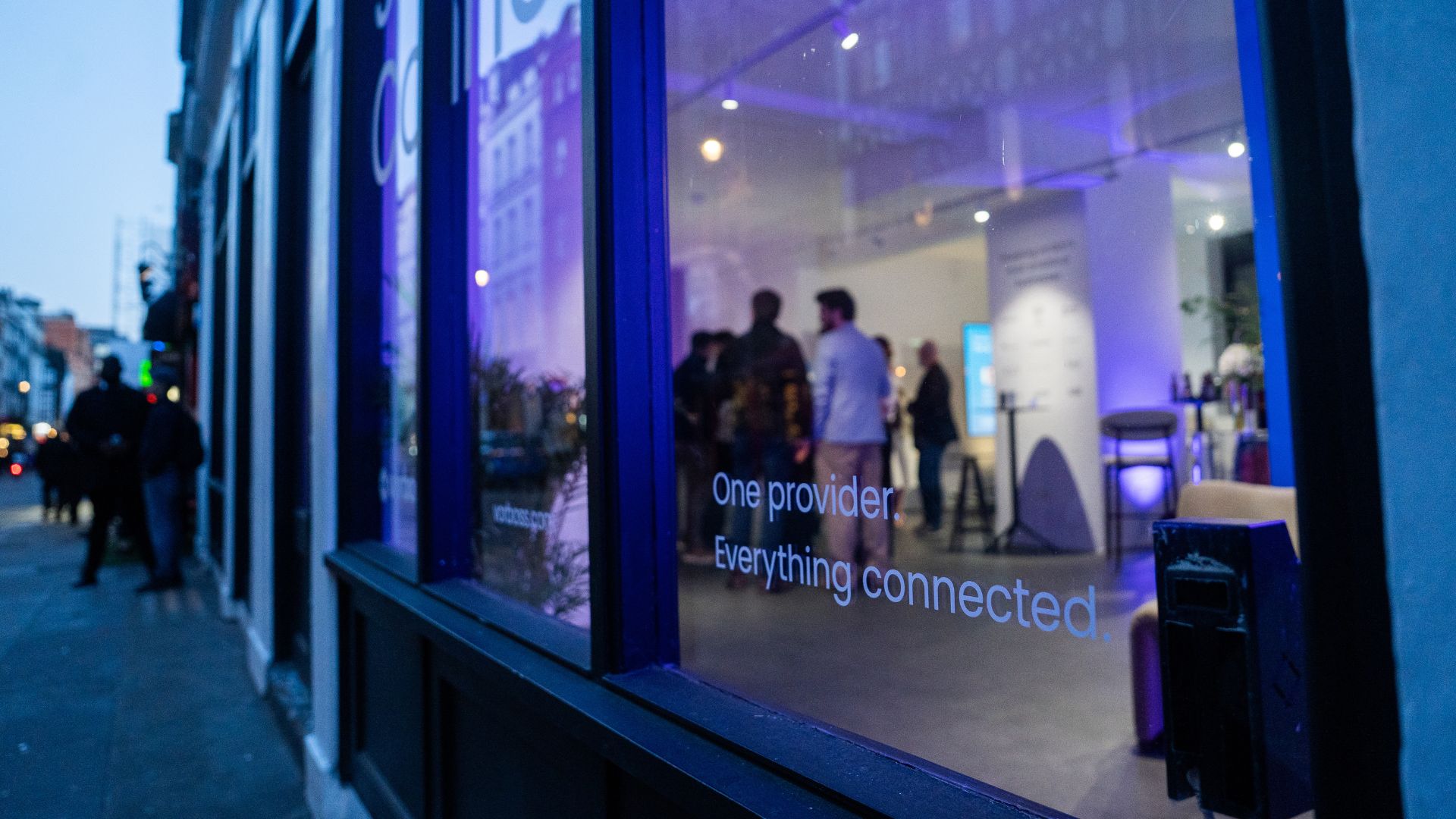
As companies grow, so does the technology behind them. Connectivity, IT and cybersecurity often end up spread across multiple suppliers, contracts and support models. Simply Connected brings it all together under one provider, making it easier to manage, easier to support, and clearer to understand costs.
At the heart of it is Vorboss’ own fibre network spanning over 750km across London, built, owned and operated in-house, with the same team designing, installing and managing the full setup end-to-end.
“Office technology has become overcomplicated,”
said Rhod Morgan, Chief Operations Officer at Vorboss.
“Many businesses have the right services on paper, but the experience feels disjointed. We wanted to remove the grey areas. Customers manage one relationship, have access to local support and receive one predictable monthly bill. The same team that builds the solution runs and supports it day-to-day.”
Simply Connected includes modular services that flex around each business and scale as it grows:
- Dedicated internet connectivity from Vorboss
- Fully managed office networks
- Managed IT and hardware provisioning
- Cybersecurity
- Ongoing support delivered by local London experts

Vorboss is powering the ambitions of London’s businesses with blazing-fast connectivity, managed IT, and serious cybersecurity. As we grow, we are focused on building a team that reflects the diversity of the customers we serve.
This year’s gender pay gap results mark a clear step forward, with both our median and mean pay gaps in favour of women, placing us ahead of the UK benchmark.
We recognise that lasting change depends on improving representation across roles and levels, and we are taking deliberate action to support this through inclusive hiring, clear career pathways and ongoing development. We are proud of the progress made and remain committed to achieving gender parity across Vorboss by 2028.
Read the full report here.

.avif)

.avif)
