The copper switch-off explained for London businesses and building operators | Book your free copper audit
.jpg)
.avif)
London’s still the UK’s economic engine and one of the most innovative cities on the planet. But what’s keeping it ahead? And what needs to change to make sure it stays there?
Recorded live at Vorboss HQ during London Tech Week, this panel brought together influential figures from tech, property, and investment to talk recent news, the challenges businesses face, and the biggest opportunities shaping the future of London’s economy.

If you run a business in the UK, you’ve probably heard the term ‘fibre broadband’. But fibre comes in different forms, and not every connection delivers the same speed, reliability, or consistency. Broadband is one common option, but businesses can also choose dedicated fibre connections, like Direct Internet Access (DIA), sometimes called a leased line, that are built specifically for high-performance, reliable business use.
Understanding the differences between these connection types is key to making sure your internet keeps up with your team and growth.
Quick glossary
- FTTC (Fibre to the Cabinet): Fibre runs to a street cabinet, then copper lines carry it to your building. Speeds can be slow and fluctuate because the connection is shared.
- FTTP (Fibre to the Premises): Full fibre to your building, offering faster and more stable speeds than FTTC, but still shared with other users.
- Direct Internet Access (DIA/Leased Line): A dedicated fibre connection just for your business, with guaranteed symmetrical speeds and high-availability uptime.
FTTC (fibre to the cabinet): fibre, kind of
.jpg)
FTTC runs fibre from your provider’s network to a street cabinet near you, then uses copper wires to reach your premises (while still selling you ‘fibre’).
Copper = outdated. Which means slower speeds, interference, and fluctuating performance – especially if the cabinet’s a few blocks away or shared by lots of users. And those cabinets? They’re exposed to weather and vandalism, adding yet another layer of risk.
Who is FTTC for?
FTTC might work for casual browsing, but if your business depends on video calls, cloud platforms, or remote collaboration, expect slow uploads, dropped connections, and no guarantees when things go wrong.
FTTP (fibre to the premises): better, but still shared
.avif)
Unlike FTTC, FTTP is a fibre connection that runs straight from the exchange to your building. With no copper cabling involved, it offers better speed and stability.
But here’s the catch: while this is often what internet service providers call ‘business broadband’, you still share your connection with up to 30 others. And while the average speed range is typically quoted as 150 to 900Mbps, the reality is, you often won't always experience those speeds, particularly during peak times because you share your bandwidth with others.
Who is FTTP for?
For micro businesses or early-stage start-ups, FTTP may provide a half workable solution, especially as a stepping stone. But be prepared for pixelated, laggy video calls or a long wait to download a pitch deck during busy times and sometimes, for no apparent reason at all.
As we put it in our earlier blog comparing broadband to leased lines: ‘If it’s broadband, it’s shared’. FTTP is still broadband and not something that provides a genuine solution for reliable connectivity.
What to be aware of if you are considering buying FTTP
FTTP can sound a lot like a high-end business service. It’s full fibre. It promises impressive speeds. And it often comes with confident-sounding terms like ‘uptime guarantee’ or ‘symmetrical speeds’. But these features deserve a closer look, because what they offer in theory isn’t always what they deliver in practice.
Take ‘symmetrical speeds’. FTTP can technically offer equal upload and download speeds, but only if the network isn’t busy and your plan allows it. Most of the time, upload speeds drop off when everyone’s online.
Then there’s the ‘uptime guarantee’. Sounds great. But without automatic compensation for downtime or real SLAs, they're often just marketing phrases – not a sign of real accountability. Many providers only commit to a response or investigation window, rather than to actual fix times.
Other elements that sound impressive but don’t necessarily reflect business grade standards. Static IP addresses are promoted as a ‘business’ feature, but these are widely available as standard on home broadband. ‘Priority fault handling’ usually just means you’re ahead of domestic users - not first in line for a fix.
So, while FTTP is better than FTTC, it is still very much part of that ‘broadband’ family. It’s a strong consumer-grade product, but not a substitute for a business-grade connection.
FTTC vs FTTP: How to tell what connection you have
Many businesses get sold 'broadband' without knowing the type of fibre connection. Here’s how to check:
- Check your provider’s plan documents or welcome email – it often states FTTC or FTTP.
- Ask your provider directly – they can confirm whether your line is full fibre (FTTP) or fibre to the cabinet (FTTC).
Knowing which connection you have matters because FTTC and FTTP have very different speeds, reliability, and suitability for business workloads.
Direct internet access (DIA): fibre built for business
.jpg)
DIA, sometimes known as a ‘leased line’ or ‘dedicated internet’, is a full fibre connection exclusively allocated to a single business. Unlike FTTC or FTTP, it isn’t shared with neighbouring offices or homes, and it isn’t affected by the demands of other users on the network.
It’s your own, dedicated connection, built for performance, reliability, and security.
With DIA, you always get ‘actual’ symmetrical speeds, meaning your uploads are just as fast as your downloads. This makes a big difference for real-time communication, file transfers, and cloud tools. You also benefit from 1:1 contention, meaning your bandwidth is always your own and performance doesn’t drop at peak times - because there’s no one else on your line.
Most importantly, DIA comes with robust service-level agreements (SLAs). These go beyond vague promises, offering clear commitments on uptime guarantees, target fix times, and - with a good provider - automatic compensation if things go wrong.
It’s not just about speed; it’s about having trust in the service that underpins your operations.
Who is DIA for?
- Teams that rely on cloud-heavy workflows: platforms like Salesforce, Azure, AWS, or cloud CRMs need reliable 24/7 access. Outages or slow speeds mean lost hours and lost business.
- Creative and media teams: agencies and production houses transferring large design files or uploading media to the cloud need fast, stable upload speeds. DIA’s symmetrical performance makes that possible.
- Security-focused organisations: if your business runs VPNs, firewalls, or handles sensitive data, you need a connection that supports uptime and compliance without compromise.
- Hybrid/remote teams: distributed workforces need reliable video calls, collaboration tools, and seamless file sharing. DIA keeps everyone connected – consistently.
FTTC vs FTTP vs DIA: the differences that matter for London businesses
Choosing the right internet connection for your business
FTTC, FTTP and DIA each have their place, but they’re not interchangeable. Unfortunately for many businesses, the differences become visible the moment the connection is put under pressure.
For businesses in this day and age, FTTP and FTTC are not fit for purpose. And being overly reliant on outdated infrastructure costs London businesses billions a year in outages.
DIA (whether you call it a leased line or dedicated internet) is designed with business in mind. For teams working in the cloud, relying on uptime or collaborating in real time, it offers a level of confidence that shared broadband simply can’t match.
Choose with care. The best internet solution is the one that will support the way your business works not only now, but also as it grows.
If you want to find out if DIA is right for your business, get in touch with our team. We're always happy to chat through your options.
.avif)
London Tech Week – one of the most exciting events of the year for tech enthusiasts. It brings people from all over the world to our favourite city.
As a partner, we hosted a series of official fringe events at Vorboss HQ throughout the week – including a live panel discussion led by our Founder & CEO, Tim Creswick.
The panel featured industry leaders from tech, real estate, and investment:
- Russ Shaw CBE, Tech London Advocates & Global Tech Advocates
- Shaun Simons, Compton
- Jonathan Pollock, Elbow Beach Capital
Their conversation explored what’s driving London’s momentum, and where the biggest opportunities lie. From unlocking capital to the green transition, the panel shared where London is already winning, what’s starting to shift, and what needs to happen to turn potential into progress over the next decade.

At May's biquarterly Women in Telecoms meetup, hosted at Vorboss HQ, women from across the industry came together to share experiences, reflect on progress, and explore what real inclusion looks like.

The session, led by Natalie Strange, MD of RPS Telecoms and Head of the Women in Telecoms group, included a panel discussion with our colleagues at Vorboss about their experiences in the industry, the steps we’re taking to make telecoms more inclusive, and what's next.
Here’s how the discussion went

Meet the panel
Jade, Team Lead Engineer
Joined Vorboss at 18 as an apprentice. Now leads on-site fibre installation teams across London.
Tamryn, People & Culture Manager
Originally joined as a Training Administrator. Now helps embed inclusive policies and support systems across the organisation.
Taylor, Head of Operations
Leads the teams that connect customers and deliver our service end-to-end.
Q: What has your journey been like as a woman in telecoms?
Jade shared her positive experience:
“It’s been amazing. I knew I didn’t want to go down the university route; I wanted to get stuck in and work. Vorboss trained me from the beginning, and now I lead my own team. I genuinely love what I do.”
Tamryn, who recently came back from maternity leave, shared:
“Coming back was a big worry for me – would I still fit in? Would I be supported? The answer’s been yes. We have a parent room, a fridge for milk, and my son’s even visited the office. My son’s even visited the office!”
Q: What hiring barriers still exist in telecoms, and how are we addressing them?
Tamryn:
“For engineering roles especially, we had to rethink the language we used. The old versions were unintentionally harsh and often male-coded. Once we made them clearer and more neutral, more women applied”
Some practical changes discussed included:
- Remove industry jargon from job descriptions
- Manually review CVs instead of relying on (often biased) AI-driven filtering
- Eliminate unnecessary degree requirements
- Run diverse interview panels

Q: How can companies like Vorboss foster more inclusive environments that attract, support, and retain women – from technical roles to leadership positions?
Tamryn:
“We’ve made training fully in-house through the Vorboss Academy, so no previous experience is required. That’s opened doors to people who wouldn’t normally apply. We’ve also built internal career tracks, flexible policies, and training for inclusive management.”
Vorboss has launched these initiatives to retain talent and progress women into leadership roles:
- Internal secondments: opportunities to explore other career options internally.
- Training: manager training on inclusive team management plus annual DE&I and menopause awareness training for all staff.
- Flexibility: accommodating workforce needs, e.g. part-time contracts.
- Internal promotion: fostering internal growth means more women in senior roles, helping us retain talent.
- Listening and acting on feedback: from uniform design to policy, we want to ensure everyone feels seen.
Other policies include paid period days, free sanitary products, IVF and adoption leave, domestic abuse support, free breakfast and welfare vans.
Jade completed a secondment with our data centre team. Though she stayed in her role, she found the experience valuable:
“It was such a good learning experience. It gave me more context and helped me feel more confident in my role.”
Q: What barriers have you encountered (or seen others face), and what helped you or your teams overcome them?
Tamryn:
“Workwear. It seems small, but early on we realised all the uniforms were made for men; gloves, trousers, fireproof kit. We redesigned it all. It took time, but it meant that everyone could work more effectively.”
Q: What advice would you give to the next generation of women pursuing careers in telecoms?
Taylor had clear advice:
“Don’t assume the person you’re talking to knows more than you. Say yes to opportunities. If you fail, that’s fine. Ask for help and keep moving.”
Jade:
“Do it! It’s been life changing for me. I’m so grateful I took the chance.”

Q: What’s next for Vorboss?
We want to keep growing - not just in size, but in diversity, inclusion, and opportunity, and inspire others to follow suit.
We’ve set measurable goals for diversity and inclusion, including:
- Today: more than 1 in 3 of our technical and engineering roles are held by women.
- By 2027: we aim for 50/50 gender parity in technical and engineering roles.
- By 2028: we aim for gender parity company-wide.
We’ve signed Ofcom’s Women in Tech pledge and publish our gender pay gap report annually.
About Women in Telecoms
Women in Telecoms is an initiative by Comms Council UK, created in response to growing demand from its members for regular opportunities to network, share experiences, discuss key industry topics, and exchange ideas.

Vorboss formalises strategic partnership with Roc Technologies to deliver innovative connectivity services to London's local councils.
London, [02.06.2025] – Vorboss, London's leading dedicated connectivity provider, today announces a strategic partnership with Roc Technologies to deliver best-in-class network solutions tailored specifically for local councils across the capital.
This partnership, borne of long standing collaboration between the companies, brings together two organisations committed to leveraging technology to enhance public sector services. The Vorboss high-performance, resilient network, combined with Roc Technologies' highly secure, customer-centred approach, provides local councils with a distinctive and robust solution to address real citizen needs.
Jason O’Malley, Chief of Commercial Operations at Vorboss, said: "We're excited to be partnering with Roc Technologies, whose values and customer-centric approach align closely with our own. This partnership enables us to offer unparalleled connectivity solutions, directly improving service delivery and efficiency for local councils."
Adam Jarvis , CRO at Roc Technologies, added: "Our partnership with Vorboss brings together two businesses that truly differentiate in the way they support their customers, providing highly responsive services designed to enhance their overall experience. Leveraging Vorboss' superior infrastructure and their technical experts located across London allows us to provide a combined service delivery capability that transforms how local councils manage their infrastructure, ultimately benefiting the communities they serve."
The combined expertise of Vorboss and Roc Technologies presents councils across London with an unmatched proposition: cutting-edge connectivity delivered with clarity, reliability, and a shared dedication to customer-driven outcomes.
ENDS
For further information, please contact:
Kirstie Lane
Kirstie.lane@vorboss.com
About Vorboss:
Vorboss is London’s dedicated enterprise fibre network. We are disrupting the status quo by providing London businesses with access to critical fibre infrastructure with simple, transparent pricing and London-wide coverage.
Since 2019, we've invested over £250 million into our London network. We have deployed over 700km of fibre optic cables to date, setting an unparalleled standard in both scale and quality.
We maintain complete ownership of the network that we built. This gives us the freedom to approach telecommunications differently.
Partners and customers deal directly with the engineers who built the network, and we can deliver installations and bandwidth upgrades within days, not months.
About Roc Technologies:
Who are Roc?
Roc Technologies delivers transformational IT solutions to public and private sector organisations across the UK. We are a team of brilliant minds, bringing together highly secure infrastructure, advanced cyber security, intelligent automation and modern cloud services, all supported by our 24/7 Managed Services Operations Centre. Our expertise is backed up by some of the UK’s most rigorous data and security accreditations; we’ve earned the trust of the nation’s largest and most complex organisations and have safeguarded their most sensitive data for over a decade.

At Vorboss, we have completely transformed business connectivity in London. By building a vertically integrated organisation, we have created a dedicated business fibre network that is driving London towards 10Gbps as a standard, a change that businesses desperately need.
Our innovative business model has allowed us to build a network with significantly more capacity, we start where others top out, connecting customers up to 100Gbps at market-leading rates. We also get customers connected much faster than the current industry standard, setting us apart.
Why did we throw out the traditional telecoms playbook? So we could redefine what's possible for London's underserved businesses. The Vorboss way isn't just a different way, it's a better way, and this is how we did it.
Building a disruptive business model

Building London's best full-coverage business fibre network was no small feat. 70% of the UK's connectivity demands are in Central London, but an ageing incumbent internet operator serves 80% of that market. It can't meet the needs of modern businesses, which is why we came in and built our network with the latest technology and newest design.
We built a future ready network that serves ambitious businesses. To date, we've deployed over 500 km of network in three years—a scale no other fibre company has taken on in Central London, especially in such a short amount of time.
We achieved this through vertical integration; by owning the entire value chain from fibre to service delivery, we have complete control over the quality and build of our network. We offer our customers the highest levels of reliability and flexibility, which isn’t possible with a traditional telecoms model.
Putting customers first
Unlike most telcos, we started by thinking about customers’ needs and worked backwards. A laser focus on market-leading bandwidth, capacity, and delivery has resulted in unassailable products for London's enterprises.
Vorboss is the only vertically integrated Internet Service Provider (ISP) dedicated to business in London. Our people-focused operational model maximises efficiency and delivers an outstanding customer experience.
Powering an unconventional model

Our belief that people come first and assets second led us to create an unconventional model for powering our network.
Creating a motivated workforce
To be truly vertically integrated, we had to start with our workforce. We created a certified training academy that takes people with zero telecoms experience and qualifies them to build our network. We are one of only a few UK ISPs that do all their training in-house; while it may not be the easy option, it is the only way to deliver the quality standard necessary for our ambitious customers.
Keeping our training in-house allows us to build diversity and inclusion into our team, addressing the industry's significant diversity problem from the ground up. By looking at real-life people rather than numbers, we have created a team that is engaged, motivated, and willing to think differently to solve problems for customers. This approach makes good business sense, but it's also the right thing to do; future decision-makers will want to buy from companies that share their values.
From planning to customer support, it is an exceptional customer experience from end-to-end. Our customers will only ever speak to members of the Vorboss team, not contractors.
Moving people and assets separately

Many of our employees are young Londoners who rely on public transportation to get around the city. Rather than limiting our talent pool to those who can drive, we developed a system where we separated personnel and resources.
Our model enables Installation Technicians to travel to site via public transportation. We hire professional drivers to transport tools and equipment to workers in the field. This separation allows our teams to deliver a better product by moving faster and working more efficiently.
Building our own software
Early on, we saw that we needed more than off-the-shelf software solutions to power our innovative model. We have assembled a team of 25 Software Developers (and growing), led by our Chief Information Officer, so we can move at speed and build customer-facing products that are fit for purpose.
Our Software team has built a data management platform that sees the relationships between all business data. They build tools to aid deployment and network operation; for example, they developed a tool that finds all customers affected by a given fault. Using low-code prototypes, business problems are solved in minutes rather than hours.
By having a dedicated Software team working on our core business functionality, we increase yield for the rest of the business. This allows us to operate with agility, build solutions that our customers need, and make strategic decisions based on real-time data.
Setting a new standard

Our organisation is made for change. Our network will accommodate the evolving economic climate, as well as the growing needs of our customers, to secure London’s position in the global economy.
After growing a workforce of around 400 and building the ability to connect over 120,000 businesses in Central London, we can safely say that our model works. Backed by the Fern Trading Group, which is advised by Octopus Investments, our fresh approach and extensive premium network, combined with a team that reflects the communities it serves, has made us the best and largest business-only fibre network in Central London.
If you would like to learn more about getting connected with us, speak to one of our experts today.
Latest from the press room
The experience driving our growth
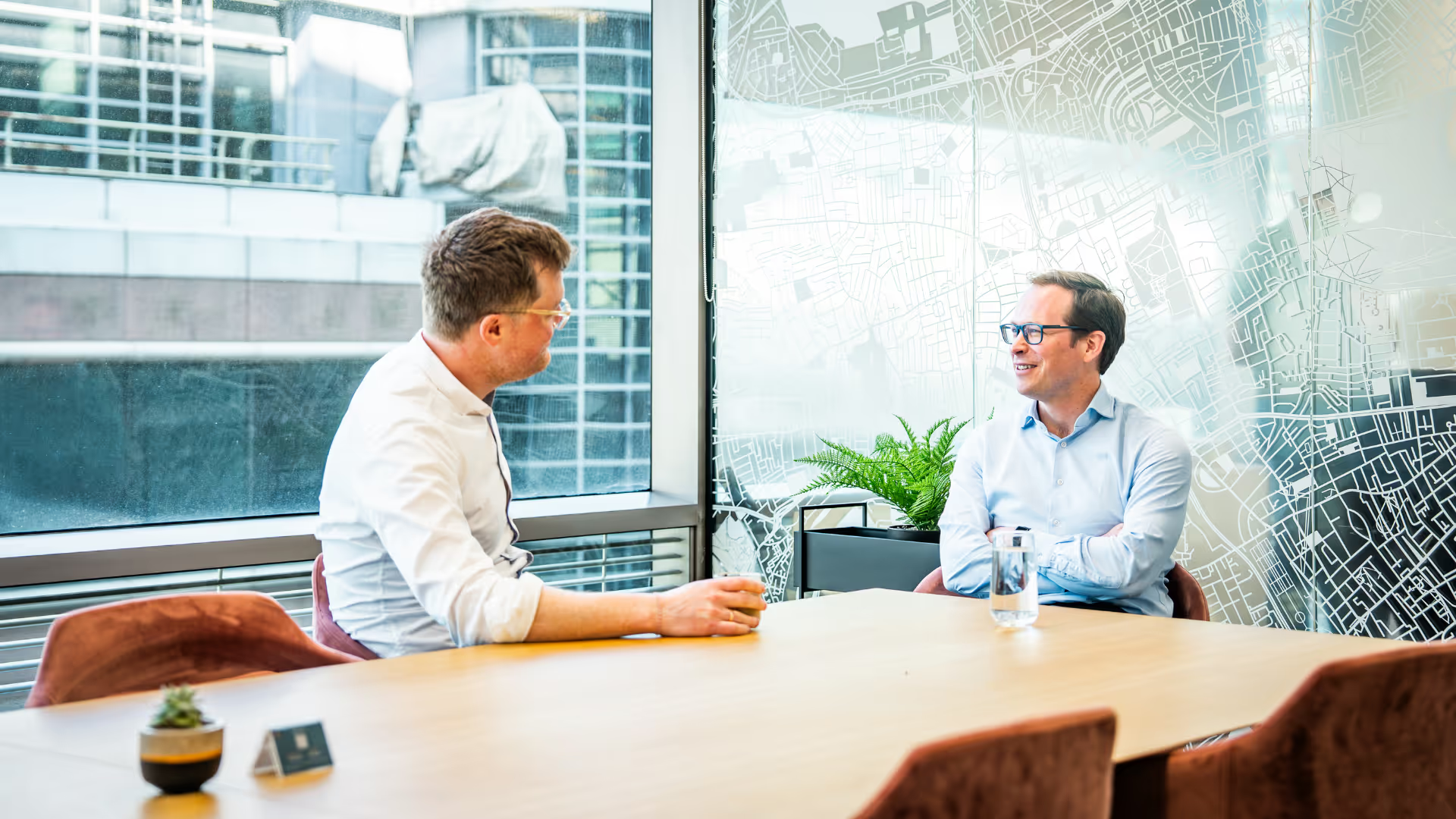
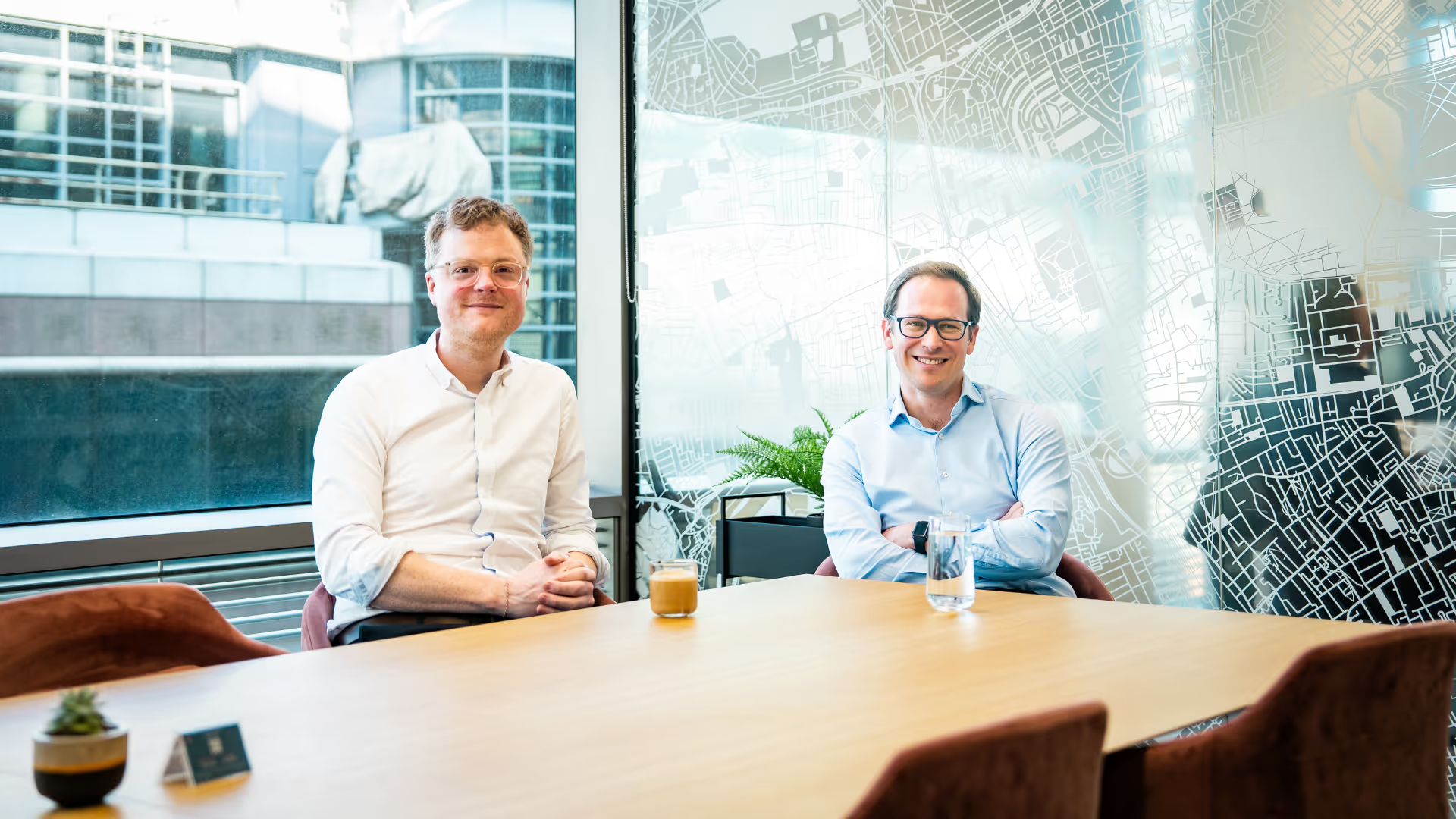
David has been central to our success as our Chief Financial Officer. Drawing on his experience at Zayo Group and RBC Capital Markets, he brings strong insight across large-scale infrastructure, investment banking and managed services. As our CFO, he’s been instrumental in shaping a commercial model that supports businesses as they grow, giving our customers the certainty and simplicity they expect.
Rhod has played a pivotal role in operations at Vorboss since 2020. He led the build of our network, now spanning over 900 km, and has raised industry standards across quality and efficiency, making sure our customers have a flawless experience. With previous roles at companies like Arup and WeWork, Rhod understands the complexity of London commercial real estate and knows exactly what it takes to deliver world-class technology in a fast-paced city.
The next chapter
Under David and Rhod’s leadership, we are doubling down on our commitment to keep things simple for our customers and remain the transparent, accountable provider ambitious businesses rely on as they grow.
“Vorboss is on path to becoming one of the UK’s leading B2B connectivity and managed service providers,”
says Adam Dunlop, Operating Partner at Octopus Capital and Chair of the Vorboss Board.
“With David and Rhod’s leadership, and the strength and commitment of the team across the business, I am genuinely excited about what lies ahead.”
Vorboss is part of the Fern Trading Group, managed and advised by Octopus Investments. This partnership, backed by £250million in funding, enabled us to build an independent, 100Gbps London fibre network and connect thousands of businesses across the capital. Having expanded our offering with a range of cybersecurity and managed technology solutions last year, we continue to do things differently by delivering everything end-to-end through our in-house teams.
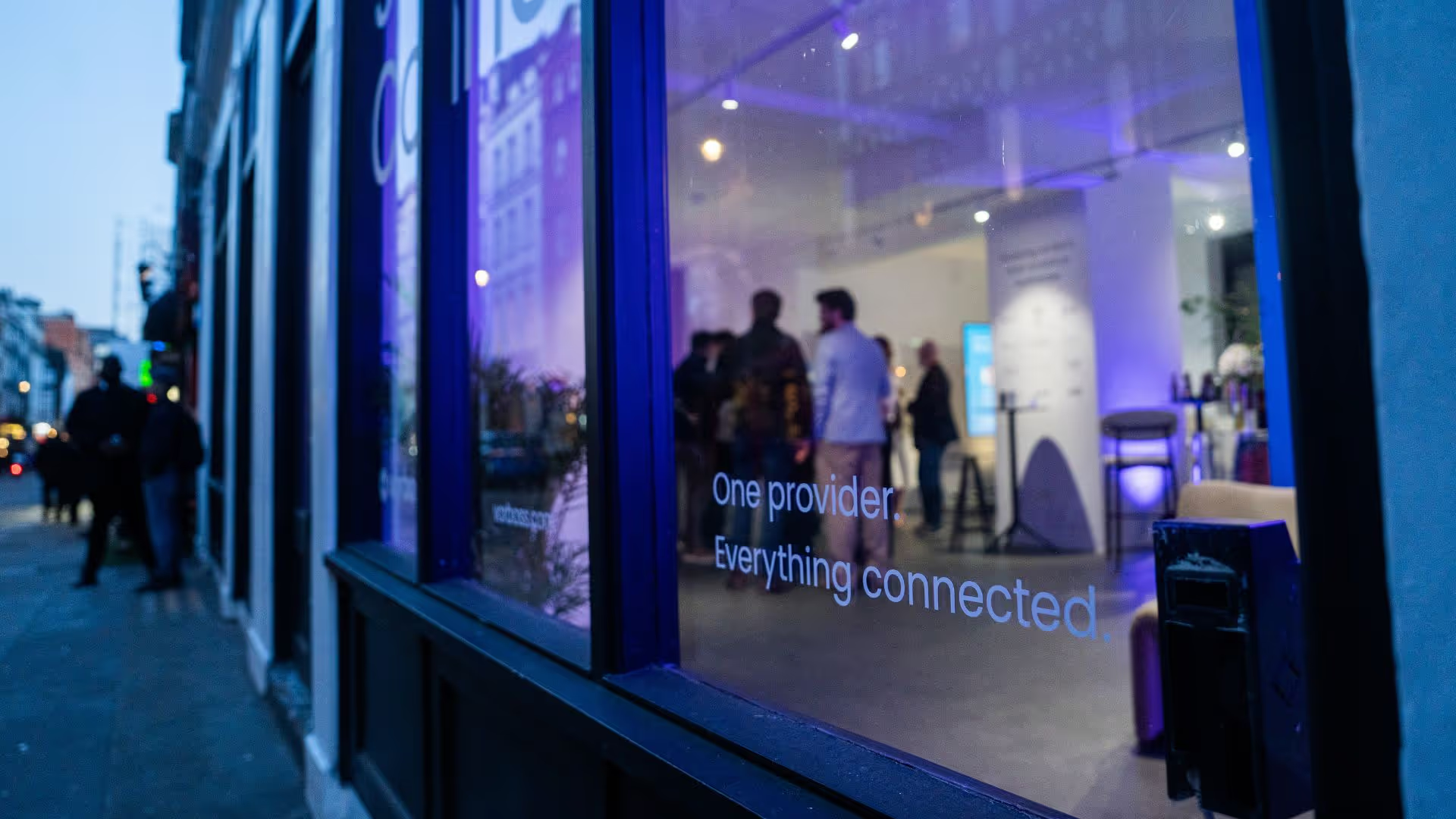
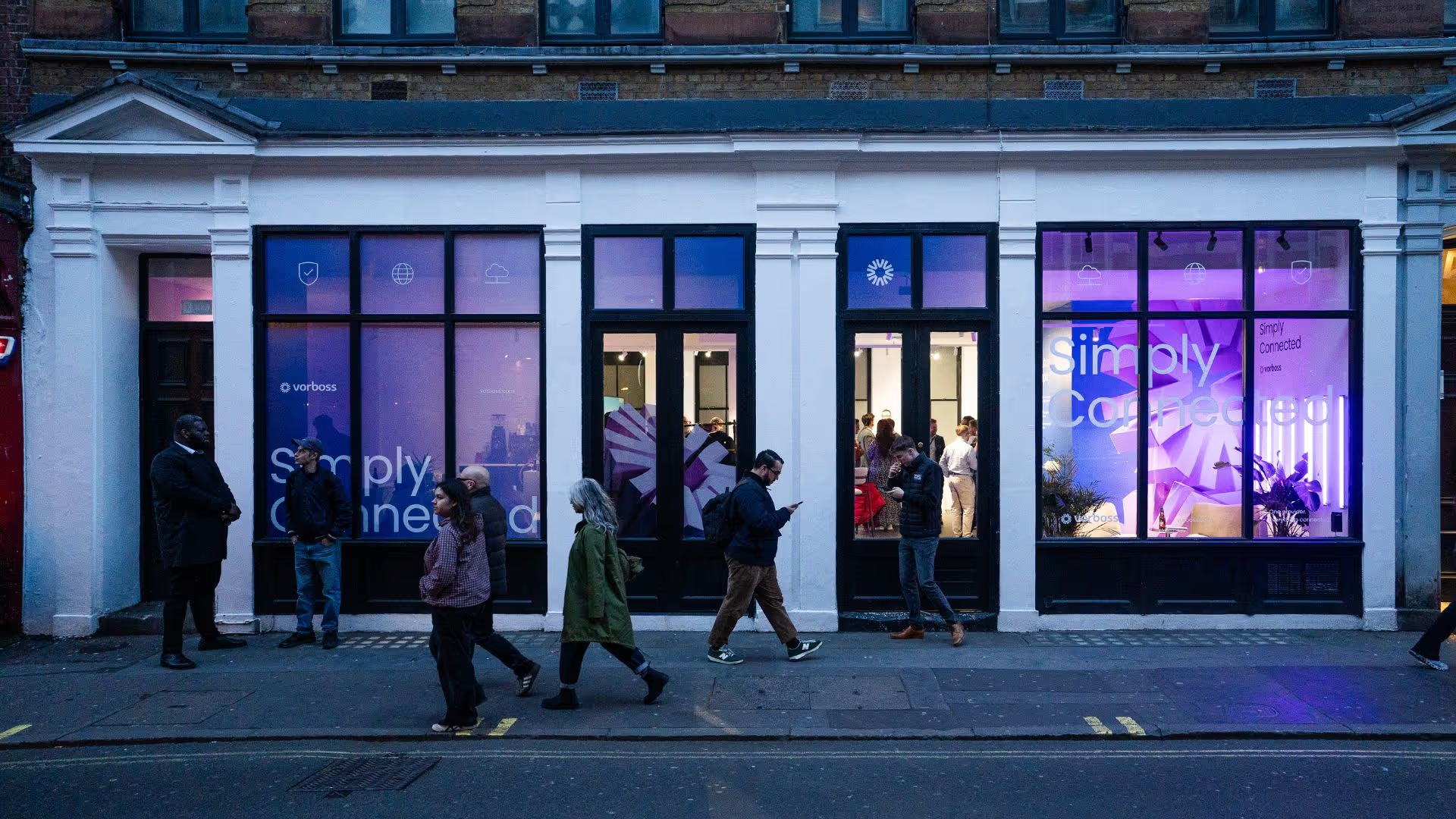
As companies grow, so does the technology behind them. Connectivity, IT and cybersecurity often end up spread across multiple suppliers, contracts and support models. Simply Connected brings it all together under one provider, making it easier to manage, easier to support, and clearer to understand costs.
At the heart of it is Vorboss’ own fibre network spanning over 750km across London, built, owned and operated in-house, with the same team designing, installing and managing the full setup end-to-end.
“Office technology has become overcomplicated,”
said Rhod Morgan, Chief Operations Officer at Vorboss.
“Many businesses have the right services on paper, but the experience feels disjointed. We wanted to remove the grey areas. Customers manage one relationship, have access to local support and receive one predictable monthly bill. The same team that builds the solution runs and supports it day-to-day.”
Simply Connected includes modular services that flex around each business and scale as it grows:
- Dedicated internet connectivity from Vorboss
- Fully managed office networks
- Managed IT and hardware provisioning
- Cybersecurity
- Ongoing support delivered by local London experts